miércoles, 27 de agosto de 2014

7 Cardinal Rules For Carbs: How To Pack On Mass WITHOUT Getting FAT

Do you “walk past a carb” and get fat?
It seems that way sometimes doesn’t it?
Yet, there are many men and women that can literally eat anything and not gain an ounce of fat, but chances are, that’s not you. It certainly wasn’t me.
Learning to properly manage carb intake has taken me years of trial and error.
Like some people, I used to think I had to starve myself of carbs to ever see my abs. Even when I was training hard, it felt like I had to really limit my carb intake or I would get fat.
Tired TrainingI really felt that because I had to limit my carbs so much that my growth suffered big time! I barely had enough energy in the gym, and when other guys were getting insane pumps, I was struggling to feel any at all.
There were days when I was amped to train, but as soon as I got to the gym to start the workout, I felt like I needed a nap. I needed a double dose of pre-workout just to get me started.
And I really had no idea why!
I was doing exactly what the magazines and other fitness pros told me to do.
The other guys would grow really fast, and I seemed to struggle to gain any muscle at all.
I have tried simply disregarding my bodyfat levels, eating the amount of carbs suggested by lean bodybuilders and magazines, and my fat accumulation was so fast that my immediate insulin resistance led to poor energy for my workouts, constant sleepy days and even more fat gain.
Following the diet recommendations of typical pro bodybuilders, and average “trainers”, will simply NOT work for 99% of the population of the world!
If you can eat whatever you want and stay lean, then you wouldn’t likely be reading this article.
Is it just a fact of life that some people will always be lean, and others will gain fat, or struggle every day to keep it off?
After 15 years of using myself as the test dummy (literally!), as well as training 1000’s of clients and friends, I can unequivocally say that you CAN learn to manage carbohydrates to maximize growth and minimize fat gain.
Here are the 7 essentials of carb management to ensure you’re gaining muscle and NOT fat:

1) Measure

Just like in life, what gets measured gets managed.
It may sound complicated but if you don’t know what youre taking in, how do you expect to manage it?
You don’t need it to take over your life, but learning some simple tools to determine how many carbs are in common foods will go a long way to gauging your progress. And remember, the more meticulous you are, the faster you can get results.
1 average apple: 25g carbs
1 cup cooked rice: 50 grams carbs
1 cup dry oatmeal: 60g carbs
2 pieces ezekial bread: 30g carbs
1 medium sweet potato (8oz): 48g carbs.
You get the picture.
Figure out the basic list of the things you eat on a regular basis and make note of them. This will allow you to take control of your carb intake and to gauge energy levels.
Apply simple logic… if your workouts are lagging, and recovery isn’t great, try a little extra carbs.
If you get fat eating what you are now, it’s time to change it up. Either start burning more, or stop eating so much.

2) Earn your carbs

The best time to eat carbs?
Right after you earned them!
Do something out of the ordinary to earn your carbs. Get up and move!
Sitting at your desk all day won’t do very much for depleting muscle glycogen, so cramming down a huge serving of pasta before you train wont likely do you any good unless you’re very depleted.
Earning your carbs with something physically active will, “open your cells”, to being more receptive to the glycogen influx from eating carbohydrates, and will also burn off some of the glycogen currently stored in your muscles to make room for more.
Remember, glycogen stores are limited. Just like the gas tank in your car, once it’s full it’s full. Pouring more over the top won’t increase your ability to store it.

3) Eat most of your carbs late in the day, and / or after a workout

Your body has two primary energy sources. Carbs and fats.
It constantly switches back and forth between the two depending on a number of factors throughout the day (eg; blood sugar, epinephrine levels).
Eating more protein and fats early in the day will ensure your body is efficiently using fats as it’s primary source of fuel. As soon as you substantially spike your blood sugar with carbohydrate ingestion, your blood sugar rises and your body stops burning fat and immediately switches to using carbs for fuel.
Depending on your body’s ability to use glycogen (insulin sensitivity), eating carbs first thing in the day can not only make your body stop using any fat for fuel, but also make your body insulin resistant, and therefore you won’t use carbs effectively either. This is a term called ‘metabolic inflexibility’.
Being metabolically flexible means your body will adapt and burn whatever you put in. Inflexible means you’re likely to store whatever you put in.
The two best ways to overcome metabolic inflexibility?
- Eating protein, fats, and veggies early in the day, and saving carbs for after you workout, or the evening.
- Frequent exercise.

4) Low glycemic carbs will help balance blood sugar and help you to avoid binging

Going too low carb can be a double edge sword in itself. You’ll get hungry!
By eating mostly lower glycemic carbs, you will avoid the peaks and valleys associated with fluctuating insulin levels from consuming high sugar, high glycemic foods. Lower glycemic carbs are often the better choice, especially for people who tend be to insulin resistant.
Insulin resistance means that you can eat the same amount of carbohydrate as someone else, but your body has to produce more insulin to get that same amount of glycogen into the cells.
That extra insulin can often lead to low blood sugar or hypoglycemia – that feeling of dizziness, sweatiness, and extreme desire to eat.

5) Mix carbs with proteinsMix Carbs with Proteins

Mixing protein with your carb meals can slow stomach emptying and therefore slow down insulin spikes (the difference isn’t massive so eating protein doesn’t justify donuts as carb sources people!).

6) Don’t drink your calories

If you’re a male over 12% bodyfat, female over 20% bodyfat, chances are you’re insulin resistant. Drinking carbs in the form of juices, powders, etc, isn’t a good idea.
Solid food will fill you up, and take longer to digest, therefore not spiking insulin as much (the converse of this is people looking to bulk aggressively should consume a lot of calories from liquids).

7) Add some veggies to all of your meals (except immediately post-workout)
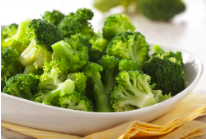
Add veggies to all mealsThe fibre in vegetables slows down stomach emptying, and therefore limits insulin spikes.
Adding fibre from vegetables can be one of the best tools for managing blood sugar, insulin resistance and fat gain. It will keep blood sugar much more stable and avoid peaks and valleys.
Post-workout is the only time when you WANT a larger insulin spike (if you’re a male under 12% bodyfat / female under 20%).

Bicep & Tricep Training Advice to MAXIMIZE your ARM development!

When attempting to build muscle, working through your active range of motion (AROM) is XTREMELY important.
What’s the full active range of motion for the biceps and for the triceps? How do you emphasize the various parts of the range and in what order?
Think you know the answer?
Find out here in todays lesson, to SKYROCKET your arm growth:

For more sleeve-ripping training advice and videos from Ben, check out MI40Nation now!

From taking care of your ANTIOXIDANT needs, to preventing CANCER

My Top 10 Fruits & Veggies!
Screen Shot 2014-08-25 at 14.15.32
Fruits and vegetables largely sell themselves. From the cancer preventing fibre they contain, to the vitamins and minerals they supply for our everyday health, development, and growth.
A lack of vitamins and minerals can have a HUGELY negative effect on the immune system. Nutrients found in vegetables called, “phytonutrients”, appear to have an important protective part to play in the prevention of many diseases. So be sure then to shovel down those veggies… especially when you’re on a reduced calorie intake (non-starchy veggies in particular in that scenario when every calorie counts).
A diet too low in vegetables is often also too low in fibre which of course can be, ahem, “problematic” ;). It may just start out as simple gastrointestinal discomfort, but could lead on to full blown colon cancer!
Get in around 12-15g of fibre for every 1000 calories you take in, the bulk of which I want you to get from veggies!
Simply put, optimizing your health and performance is NOT all about protein, carbs and fats… don’t skimp on your veggies people!
Try to get in at least 1-3 servings of veg with EVERY solid meal that you eat, along with a piece or two of fruit a day if calories allow…
…YES, you heard me!
If you’re eating 5 solid meals a day, that means a minimum of 5 to 15 servings of veg every single day!
If your meal frequency is on the lower end, choose more servings per meal simply.
Now, if for whatever reason you haven’t been eating much in the way of fruits and vegetables (veggies in-particular), start now by adding in 1 or more from the list below to EACH of your meals over the next week, then slowly build from there.
There are many options to choose from. Here are my suggestions:

My Top 10 Fruits & Veggies

1) Broccoli
High in calcium. Contains phytonutrients that disarm free radicals before they can cause damage to DNA.
Spinach2) Spinach
It’s phytonutrient content is off the charts with more than a dozen different flavonoid compounds which function as anti-inflammatory and anti-cancer agents. These also provide antioxidant benefits as well.
3) Asparagus
Contains the nutrient inulin, a carbohydrate which healthcare practitioners refer to as a prebiotic. It aids in supporting our digestive health. Asparagus is also a great anti-inflammatory and antioxidant.
4) Kale
Cleanses and detoxifies the liver. Kale, like Broccoli, is also high in Calcium. Their Vitamin C content significantly increases absorption.
Garlic5) Garlic
Contains Allicin which is anti-viral, anti-bacterial as well as anti-fungal.
6) Raspberries
Loaded with antioxidant properties, raspberries are also filled with Vitamin C and Manganese which are critical in protecting the body’s tissues from oxygen-related damage.
7) Pomegranate
Filled with antioxidant and anti-inflammatory properties.
Blueberries8) Blueberries 
Possess whole body antioxidant protection and help to maintain steady blood pressure.
9) Strawberries
Possess strong anti-inflammatory and antioxidant nutrients.
10) Lemons & Limes
The Kings of detox! Improve absorption of minerals as well as promoting weight loss. They have an alkalizing effect once they enter the body.
There are so many others to choose from as well boys and girls.
NO EXCUSES, get them in!

My 3 Favourite “Cutting” Recipes to get SHREDDED!

Cutting SUCKS!!
Let’s be honest…
Yes it may be a necessary evil to get us those rock hard abs, but it still sucks!
My hope today is to save many of you from the bland, dry, boring route we nearly all fall victim to when dieting down. We’ve all been there right? Especially during contest prep.
Last week there was a GREAT reaction on social media to My 3 Favorite “Guilt-Free” Desserts article and, while it was only intended as a bit of a light-hearted break from my normal style of material, I’ve decided based on the reaction to share with you my top 3 favourite cutting recipes as well.
Hopefully they’ll satisfy your taste-buds, as well as your fat loss goals!
First up we have my favorite burger recipe…

Bicep Building Burgers

Fresh from my chef, Maxine, at Fit OrganiX (http://www.fitorganix.com/) … shout out to Fit OrganiX!A.M.A.Z.I.N.G food! I highly recommend you check them out!
bisonIngredients
  • 1 lb raw ground beef or turkey
  • 3 carrots
  • 3 pieces celery
  • 1/2 – 1 onion (depending on taste)
  • salt and pepper to taste
  • 1-2 Tbsp chili powder or other aromatics (curry powder, garlic powder, etc)
  • 1 Tbsp rosemary or other herbs (oregano, thyme, sage)
Directions
  1. Put carrots and celery through food processor.
  2. Chop onion finely and combine with carrots, celery, and all other ingredients.
  3. Form into patties of desired size (Chef Maxine uses 3/4 cup to measure and shape)
  4. Bake at 350 degrees for 20-25 minutes. To check for ‘done-ness’, insert a knife into the patty: if the juices run clear, the meat is fully cooked.
  5. Remove from tray and let drain.
Next Up:

Mexican Salmon with Avocado “Salsa”

This one I got from my awesome MI40 Nation chef Melissa Reid!
Melissa’s a creative genius in the kitchen and makes damn tasty recipes. I know the thousands of MI40 Nation members appreciate her, and I especially appreciate her for this recipe – perfect for cutting! – high protein and veggies with the inclusion of good fats. And it’s DELICIOUS!
food2-4 Servings
Ingredients
  • 1-2 lb salmon filet, cut into manageable pieces
  • 2 Tb lemon juice
  • 1 bunch cilantro, diced
  • 1 Tb paprika
  • 2 tsp cumin
  • 1 Tb coconut or mct oil
Avocado Salsa
  • 2 tomatoes, diced
  • 1 small or 1/2 large onion, diced
  • 2 tsp lemon juice
  • 1 tsp cumin
  • 1/2 tsp salt
  • 1 tsp hot sauce
  • 1 avocado
Directions
  1. Mix salmon with lemon juice, cilantro, paprika, and cumin. Let sit 5-10 minutes.
  2. Heat oil in a skillet over medium heat. Add salmon (presentation side down) and cook for 5 minutes, until brown.
  3. Flip salmon and cook another 5-10 minutes, or until cooked through. Remove from heat.
  4. Dice avocado and mix with remaining salsa ingredients. Serve over salmon.
Finally:

Ground Beef / Bison, Pepper & Cabbage Stir Fry

I discovered this in the recipe section of my MI40 Nation site. It was submitted by one of my MI40 Ambassador superstars… nice recipe J.D, thanks buddy! Great tasting, high protein, medium fat, great taste!
Ingredients
  • 1 lb ground beef
  • 1 lb ground bison (or double the beef)
  • 2 small organic sausages
  • 1/2 head of cabbage, sliced
  • 1 onion, chopped
  • 4 mini (or 1 large) bell pepper, chopped
  • 1 leek, white part chopped (green discarded)
  • 1 fennel bulb, chopped
  • 2 Tbsps coconut oil
  • 1 Tbsps red palm oil
  • Various seasonings (paprika, onion powder, garlic, turmeric, parsley, etc)
  • Macadamia Oil to serve (optional)
Directions
  1. Heat a pan over medium heat. Add beef/bison and cook until brown (about 5-10 minutes). Drain fat, and set aside.
  2. Heat oil in a pan over medium heat. Add vegetables and cook until done (about 10 minutes).
  3. Add meat to the vegetables, add desired seasonings, and heat through.
  4. If desired, drizzle with macadamia oil and serve immediately, or keep for up to 3 days.
Three AMAZING recipes ladies and gents. Want more? Guess where you should go?…

jueves, 14 de agosto de 2014

Build Muscle and Burn Fat Faster

The Mi40X program is suitable for individuals who are serious and committed to grow muscles and cut down body fat AKA Bulking, cutting and shredding.

The program is geared towards those who are just taking the first steps in bodybuilding as well as the intermediate and the advanced bodybuilders of all ages.

Even competitive PRO bodybuilders can use the Mi40 program in order to get into shape effectively.

Understandably, the Ben Pakulski Mi40X program contains everything that a committed Muscle Builder needs to put your muscle growth on the right track as well as getting the desired results.

The training, bodybuilding supplementation and diet tactics are all covered in comprehensive detail that is simple to understand and presented in a practical manner.

Nevertheless, the program is highly demanding and will entail full commitment just as you would expect from a Ben Pakulski bodybuilding program.

If you are fully prepared to commit to the Mi40 Xtreme program, you WILL get results!

Ben Pakulski is confident that his program works and provides a 100% money back 60-day guarantee for those who are not 100% satisfied with the results.

What comprises the Ben Pakulski Mi40X program?


The Ben Pakulski Mi40X program is composed of the following:

1.    The 40-day MASS Intelligence Training Manual – the manual basically explains the discipline behind the training tactic. The number 40 has a connection with the length of the set, length of the workout, rest period in between the sets and the number of days that the program lasts.

2.    The 40-day MASS Consumption Condition Manual – This manual is about the nutrition plan provided by Ben Pakulski in which he explains in full detail how to determine your carbs, protein and fats in order to gain muscle while at the same time lose fat. It includes foods to eat before and after the workout in order to achieve the best results as well as implementing these practices.

3.    The 40-day MASS Instruction Workout Videos – the workout videos cover the proper execution of all the exercises. It is a must for the beginners and a refresher course for advanced individuals.

                                            If you want more information CLICK HERE